
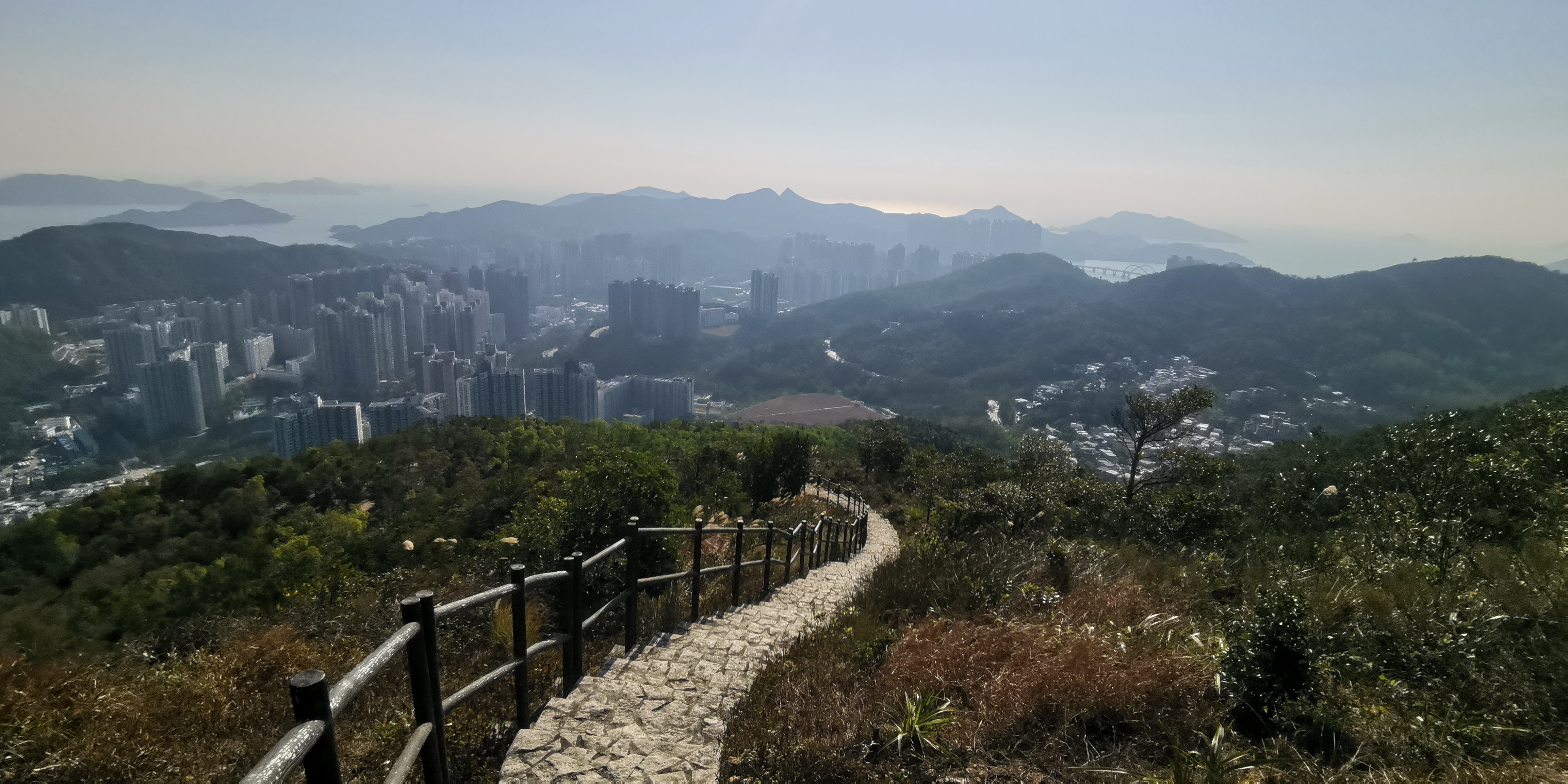

While hiking on Hong Kong’s world-class trails, have you ever noticed whether the path beneath your feet is made of cement or left completely natural? Or, more recently, there may be a third option: “handcrafted trails.” Since the 1970s, Hong Kong’s Agriculture, Fisheries, and Conservation Department (AFCD) has guided the construction of these trails, which are built using only manual labor and natural materials. The government has also partnered with NGOs to build such eco-friendly trails.
But as handcrafted trails gain support for their environmental and experiential benefits, they also face criticism over safety, construction time, inconsistent craftsmanship, etc. —raising a central question: Should Hong Kong prioritize natural paths or standardized infrastructure?
What Are “Handcrafted Trails”?
As the name implies, handcrafted trails are trails built without using machines or composite materials. According to the Green Earth, a local charity that works to make Hong Kong a healthy, sustainable green city, the philosophy behind these trails is “adapting to local conditions and using local materials.” Thus, before construction, craftsmen will assess the natural terrain, study water flow patterns and land features to create steps and drainage systems that blend seamlessly into the landscape.
While building the handcrafted trails, only manual labor, hand tools, natural stones, and fallen timber found on-site are used to minimize damage to nature.
Since the 1970s, Hong Kong has been building handcrafted trails in its country parks under the guidance of the Agriculture, Fisheries, and Conservation Department (AFCD). According to the AFCD, handcrafted trails embody a philosophy of “coexisting with nature.” The Green Earth believes that handcrafted trails “not only address existing problems but also preserve the landscape in its most natural state.”


Why Build These Trails?
The recent focus on handcrafted trails using completely natural materials stems largely from the concerns triggered by the government’s 2024 “Round-the-Lantau Route” project, which used cement and “eco-wood” (a composite material of wood and plastic) to construct the trails. According to the Civil Engineering and Development Department (CEDD) and the Development Bureau, “eco-wood” is environmentally friendly and safe.
However, this proposal was criticized by environmental groups and hiking enthusiasts who argued that these materials damage the natural experiences they longed for.
Critics pointed out that eco-wood, though touted as sustainable, essentially introduces plastic into natural environments. The construction process often involves clearing vegetation and embedding concrete foundations, contributing to soil erosion—the very problem such projects aim to solve.

Traditional construction methods typically remove existing rocks and soil, and replace them with materials that can seem out of place with their surroundings to some outdoor enthusiasts. This results in identical trails whether in Lantau or on Hong Kong Island, with no connection to the natural terrain. Handcrafted trails offer an alternative. By using materials available on-site, they can minimize the carbon emissions of transporting foreign materials and can protect natural habitats from being disturbed.
And, as Miranda Lau, a hiking lover, interviewed at the Dragon’s Back, described, they appear to be woven into the greenery around them.
“These handcrafted trails maintain the wild and varied character of Hong Kong’s beautiful nature, and give a sense of immersion and engagement to the people who walk on them,” she said.
Who’s Building These Handcrafted Trails?
The construction of handcrafted trails emerged from the collaboration between the government and NGOs. Since 2016, the AFCD has been running a program called “Repair Our Own Trails,” which invites volunteers to construct and maintain trails in Hong Kong. According to the AFCD, this activity has attracted over 1,500 people to participate as of 2025.
Different organizations, such as the Green Earth, collaborate closely with the AFCD to recruit volunteers. The Green Earth even formed “the Trail Repairing Volunteer Squad” to maintain those sustainable trails. On social platforms like Instagram, one can easily find numerous posts about handcrafted trails and volunteer activities.

At an institutional level, the Hong Kong Institute of Construction (HKIC), together with the Civil Engineering and Development Department (CEDD) and AFCD, has formalized “handcrafted trail worker” as an official trade under its Intermediate Trade Workers Collaborative Training Scheme. Using an “employ first, train later” model, the program provides systematic instruction in slope analysis, drainage planning, and the patient art of fitting stones by hand.

What Do People Think of These Trails?
There are both supporters and opponents of handcrafted trails. Some are in favor of the sustainability and natural taste of the handcrafted trails, while others question their safety and repair.
According to a report by HK 01, environmental groups, including the “Concern Group on Concretization of Hong Kong Natural Trails,” some hiking enthusiasts strongly support the handcrafted trails. They argue that these trails are not only eco-friendly, but are also stable under proper maintenance. Supporters point out that uniform steps made of concrete force hikers into repetitive motion patterns that can actually increase fatigue and injury risk. The variety of natural steps allows hikers to adjust their stride to their own ability and comfort. Moreover, they stress that removing natural obstacles and standardizing trails fundamentally changes the hiking experience from one of discovery and engagement to mere walking on urban infrastructure transplanted into nature.

However, handcrafted trails also face skepticism from some. According to the Study for Enhancement of Trails and Connectivity in Lantau, published in August 2023, handcrafted trails mainly involved the following drawbacks: unpredictable and lengthy construction time, safety concerns (handcrafted trails advocate not installing handrails), and inconsistent craftsmanship (since construction and maintenance are mainly carried out by volunteers).
Though this study has been criticized by supporters for neglecting the advantages of the handcrafted trails, it still reflects some people’s worries.
Ken Hong, a hiking lover, interviewed at Cape D’Aguilar, expressed his safety concern. “If there are floods in the mountains after typhoons in the summer, these handcrafted trails might be damaged to some extent. If repairs aren’t done in time, the stone steps could become loose, which might lead to serious safety hazards.” Besides, he also said that compared to volunteers, he tended to trust professional construction teams more.
Such concerns reflect the wider debate over handcrafted trails: supporters praise their ecological benefits and natural hiking experience, while skeptics worry about safety, repair, and construction time.
For now, both kinds of trails coexist. And the choice, as always, lies beneath your feet.

Leave a Reply