
By Caroline Lin
At Ying Kee, an open-air restaurant operated in the Hakka settlement of Lai Chi Wo in Hong Kong’s northeast New Territories, visitors were savoring traditional Hakka dishes of stuffed tofu and braised pork with preserved mustard greens.
Along the trail winding around the walled village, hikers with trekking poles paced past a gurgling stream and verdant farmlands.
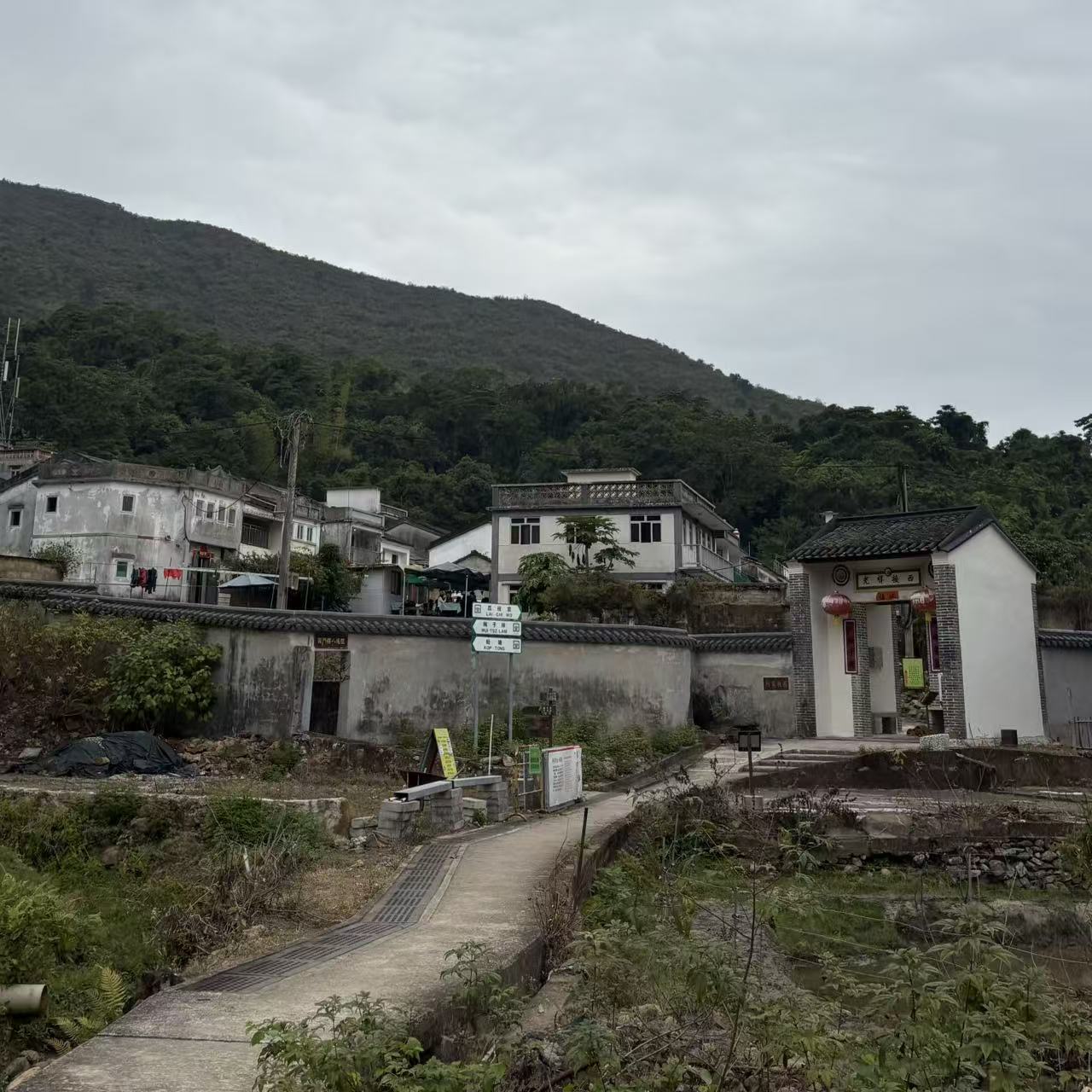
Such scenes would have been unthinkable a decade ago, when the village remained desolate, with most villagers having migrated in search of better job opportunities in the 1960s. During those years of neglect, houses crumbled, with weeds choking the cracked brickwork, while rampant vegetation took over the farmlands. Only in recent years has the Hakka village, one of the oldest and largest in Hong Kong, regained its vitality.
Through the collaborative efforts of conservation groups and returning villagers who hoped to reconnect with their ancestral homes, ruins have turned into revitalization. Today, renovated houses host lively cafes and eateries where the menus feature fresh local produce cultivated on the village’s restored farmland.
“As you get older, you just start longing for your roots,” said Tsang Yuk Wong. After decades of working away from home, the village native returned upon retirement to establish Ying Kee.

Revitalization efforts of the old Hakka settlement began in 2013 with the launch of the Sustainable Lai Chi Wo Programme, led by the University of Hong Kong in partnership with NGOs, government agencies, a private corporation and local villagers. The initiative aimed to restore both the social fabric and the ecological landscape of the abandoned farming community, seeking to draw back indigenous villagers while attracting visitors and new residents.
Tsang Pak Lun, a resident nearing age 70, said that under the revitalization project, broken down dwellings have been reconstructed, with some turned into homestays and Hakka cultural museums, and farmlands have begun harvesting again.
By the time the programme concluded in 2017, the landscape had been transformed. Three decades of overgrown wasteland have given way to five hectares of productive paddies and orchards. The village, formerly a “ghost town,” is now home to a small but dedicated community of 20 residents—including farmers, entrepreneurs, and returning elders—who maintain the daily pulse of the community.


The Hakka, literally meaning “guest families,” are a subgroup of Han Chinese known for their history of mass migration centuries ago from northern China to southern provinces such as Jiangxi, Fujian, and Guangdong due to war, persecution, and famine. Lai Chi Wo was jointly built by the Tsang and Wong Hakka clans, whose ancestors originated from Shandong and later migrated to Dongguan in mainland China.
Surrounded by forest-covered hills on three sides and facing the enclosed sea of Crooked Harbor, the nearly 400-year-old rural settlement of Lai Chi Wo flourished in the 1950s, when more than a thousand villagers were housed within. But Hong Kong industrialized and competition from agricultural products from the mainland increased in the 1960s, making it hard for inhabitants to survive on growing crops and rice. Many left for jobs in urban areas or migrated overseas to seek a more stable livelihood.
By 2010, Lai Chi Wo had become a “ghost town” with only one or two elderly villagers remaining, according to Hong Kong Geopark’s archives.


Tsang Yuk Wong was among the wave of population outflow. He went to Britain in his twenties to earn enough to support his whole family. While busy making a living in a foreign country, what the Hakka man missed most was his childhood memories of hunting Thianias—a type of jumping spider—for “spider fights” with friends, and roasting sweet potatoes in the open fields.
When he came back four years ago, the village no longer resembled the one he remembered. “The village had lost its villagers,” Tsang said.

To Tsang Pak Lun, the owner of another outdoor restaurant, Ming Kee, Lai Chi Wo was much more vibrant now than the empty and decaying village when he first returned from abroad seven years ago.
Further projects have kicked off in recent years to revive the once-silent village. Tourists now flock to the town to experience Hakka culture and hike the 1.2 kilometre nature trail, which winds through lush mangroves and an ancient feng shui wood.
Fascinated by the idyllic rural lifestyle, Ip Hiu Man has lived in the village for a few years. At the monthly farmers’ market, dwellers sell local eco-farm produce such as turmeric, ginger soap and kale powder, and among the stalls, Ip offers her own homemade popsicles to visitors and neighbors alike.

“Compared to the hustle and bustle of urban Hong Kong, I much prefer the slow pace here,” the new settler said.
Organizations extended their efforts from the redevelopment model of Lai Chi Wo to its neighboring Hakka village Mui Tsz Lam, which had been similarly abandoned. Ip also participated in the Mui Tsz Lam reconstruction. The young artist helped transform the historic settlement into a creative arts hub by painting murals inspired by local fauna and flora across the old stone walls.


(Source: Caroline Lin)

(Source: Caroline Lin)
Lai Chi Wo’s restoration has won a UNESCO Cultural Heritage Conservation Award, and yet its road to sustainably foster human-nature coexistence and co-prosperity is still a work-in-progress, as the village isn’t economically self-sufficient, and continues to rely heavily on the funds and government subsidies.
Beyond the financial struggle, a deeper, invisible decay worries former inhabitants like Tsang Yuk Wong and Tsang Pak Lun.
As they see themselves as the last bridge between the village’s past and its uncertain future, they fear their descendants may never return, even if the Hakka community has been physically brought back to life — because the younger generation does not have a connection to or memory of Lai Chi Wo.
“They were born and raised overseas in totally different cultures, and hardly have any sense of belonging to the village as we do,” Tsang Yuk Wong said.
Additional editing by: John H. Noonan

Leave a Reply